LED vs HPS Grow Lights: Which Is Better?
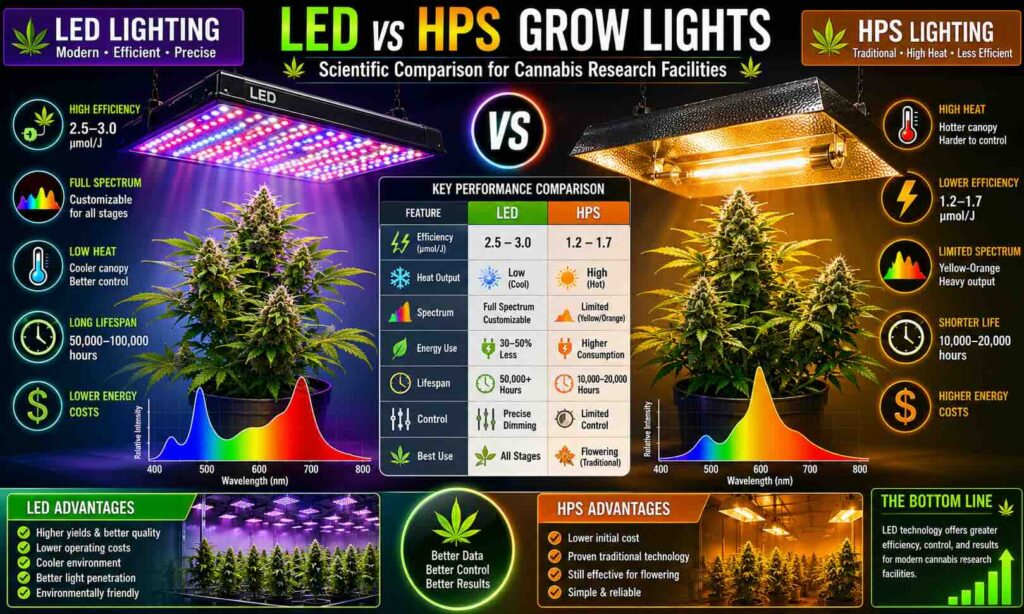
Lighting is one of the most important factors in indoor cannabis cultivation. Among the many lighting technologies available today, LED and HPS systems remain two of the most widely discussed options. Both have been used successfully by growers around the world, and each offers unique advantages depending on cultivation goals, budget, environmental conditions, and personal preferences.
The debate between LED and HPS lighting has evolved significantly over the years. Modern LED technology has improved dramatically, while HPS systems continue to maintain a strong reputation among experienced cultivators. Understanding the strengths and limitations of each approach helps growers make informed decisions when designing an indoor grow room.
Understanding HPS Lighting
High Pressure Sodium (HPS) lighting has been a cornerstone of indoor cultivation for decades. These systems became popular because they provide strong light output and have a long history of successful use in horticulture.
Many growers appreciate HPS lighting because of its proven performance and familiarity. Over the years, countless cultivation projects have been built around HPS technology, making it one of the most recognized lighting systems in the cannabis industry.
Despite the emergence of newer technologies, HPS lights continue to be used in many grow rooms around the world.
Their long track record remains one of their strongest advantages.
The Rise of LED Technology
LED lighting has experienced rapid development in recent years. Early LED systems often struggled to compete with traditional horticultural lighting, but modern designs have improved significantly in terms of efficiency, reliability, and overall performance.
Today’s LED grow lights are available in a wide variety of configurations and power levels. Their growing popularity reflects advances in engineering and increasing interest in energy-efficient cultivation solutions.
Many growers now consider LED technology a practical option for both small and large indoor cultivation projects.
The continued improvement of LED systems has transformed the indoor cultivation landscape.
Energy Efficiency and Environmental Control
One of the most frequently discussed differences between LED and HPS systems involves energy use and environmental management. Lighting contributes significantly to the overall operating conditions within a grow room, influencing factors such as temperature and ventilation requirements.
Environmental control remains an important consideration regardless of the lighting system selected. Growers often evaluate lighting choices based not only on light output but also on how the equipment interacts with the broader cultivation environment.
Understanding these interactions helps cultivators design grow rooms that are easier to manage and maintain over time.
Successful cultivation depends on balancing multiple environmental factors rather than focusing exclusively on lighting alone.
Choosing the Right System for Your Goals
The best lighting system often depends on individual cultivation objectives. Some growers prioritize familiarity and proven performance, while others focus on efficiency, flexibility, or long-term operating considerations.
Growers interested in exploring modern cannabis genetics can learn more through Ministry of Cannabis. Understanding how genetics interact with cultivation environments helps growers evaluate equipment decisions more effectively.
No single lighting system is ideal for every situation. The most appropriate choice depends on available space, cultivation style, environmental conditions, and personal preferences.
Careful planning generally leads to better long-term results than following trends alone.
The Future of Indoor Grow Lighting
Lighting technology continues evolving as manufacturers develop new solutions for indoor horticulture. Advances in efficiency, control systems, and environmental integration are likely to shape the next generation of cultivation equipment.
Both LED and HPS technologies have contributed significantly to modern cannabis cultivation, and their influence can still be seen throughout the industry. Future innovations will likely continue building on the strengths of both approaches.
Additional information regarding CBD and cannabis-related topics can be explored through https://www.cibdol.fr/blog/cbd.
Growers who understand the advantages and limitations of different lighting technologies are better positioned to make informed cultivation decisions.
Final Thoughts
The comparison between LED and HPS grow lights does not have a universal answer. Both technologies offer advantages and have proven effective in cannabis cultivation. The best choice depends on the specific goals, environment, and preferences of the grower.
By understanding the characteristics of each system and considering how lighting fits into the overall cultivation strategy, growers can create more efficient and productive indoor environments while supporting healthy plant development.
